
Have anything to ask ?
+971 58 902 2489
The Kangaroo Plains Project is a strategically located exploration asset covering approximately 1.1 km² within Western Australia’s Eastern Goldfields. Though compact in size, the project holds significant potential for gold and base metal discoveries, supported by its location on a key regional structural boundary and a record of historic high-grade production.
The tenement lies directly on the Bullabulling–Coolgardie domain boundary, a well-recognized mineralized corridor that hosts:
This same structural setting enhances the geological credibility of the Kangaroo Plains Project, making it a strong candidate for systematic exploration.
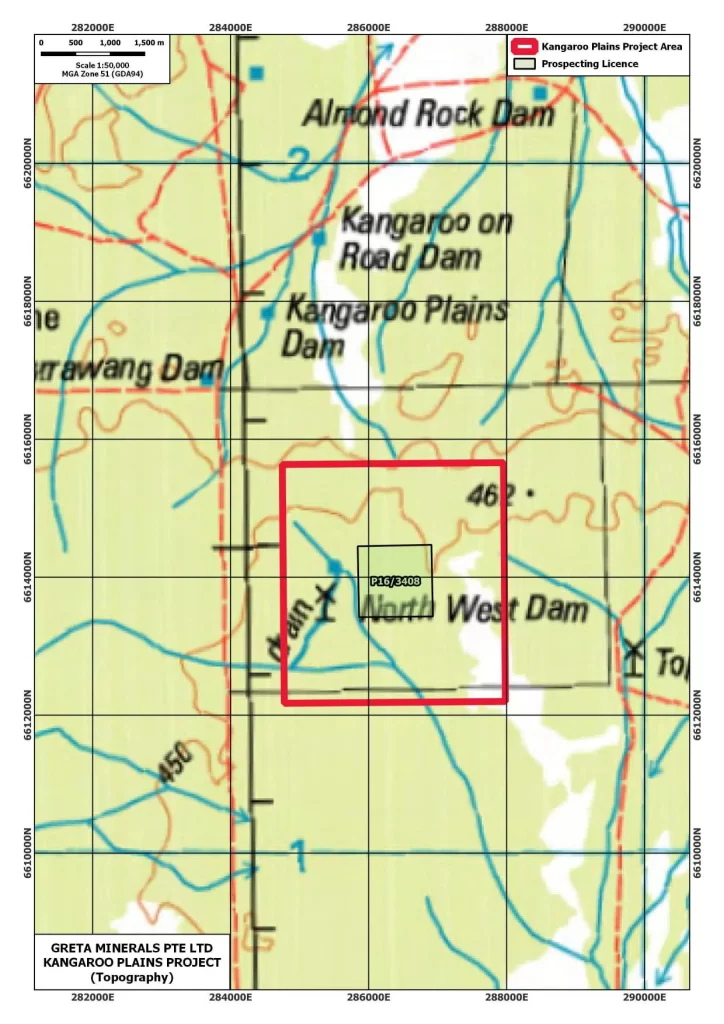
Historical records from the Masterton Mine (1904) document the dollied recovery of approximately 1,000 ounces of gold from ore averaging 20.4 g/t Au. Operated by “City of London GMs Ltd,” the site was not systematically followed up, and the broader area remains largely underexplored, though actively held by local prospectors.
The project warrants a modern, systematic exploration program, including:
This multi-target approach is supported by regional analogues:
In the 1970s, Kennecott explored VMS-style copper-zinc systems in the area, and subsequent drilling by Gold Tiger near the adjacent Credo Project revealed copper sulphide mineralization in highly altered volcanic units—adding credence to the base metal potential across this corridor.
With a legacy of high-grade gold production, location along a proven mineralised domain boundary, and compelling signs of VMS-style alteration, the Kangaroo Plains Project represents a high-impact, low-footprint opportunity for gold and base metal discovery.
Greta Minerals Australia Ltd is prioritizing next-phase groundwork including sampling, mapping, and geochemical analysis to assess both historical targets and new zones of interest.